Folio 12b
Chapter on the sphere of the Sun. The sphere of the Sun, like the other spheres, is bounded by two parallel surfaces(?). Its upper surface touches the concave surface of the sphere of Mars, and its lower surface the convex surface of the sphere of Venus. Its revolution is from east to west.*1
When three hundred and sixty-five and a quarter days have passed, its circuit is complete.
From the sphere of the Sun a sphere is set apart whose centre is eccentric. Like the spheres of the three planets mentioned, this separated sphere stands in place of an epicycle for the Sun.
It is of God Most High's perfect grace and care for His servants that, had the Sun an epicycle like the other planets, its retrograde motion would have lengthened the summer days to six months, and winter likewise would have lasted six months.
In that case the air would be corrupted and the temperament altered, leading to the destruction of living creatures. For if the Sun stood over a people's heads for six months in a row, their temperaments would be spoiled and their bodies(?) would burn and perish; and if it stayed far from them for six months, the severity of winter would in turn alter their temperaments, their innate heat would be extinguished, and their temperaments and bodies(?) would be ruined.*2*3
Between the upper and lower surfaces of the sphere of the Sun there are three hundred and fifty-five thousand and seventy-four miles.*3
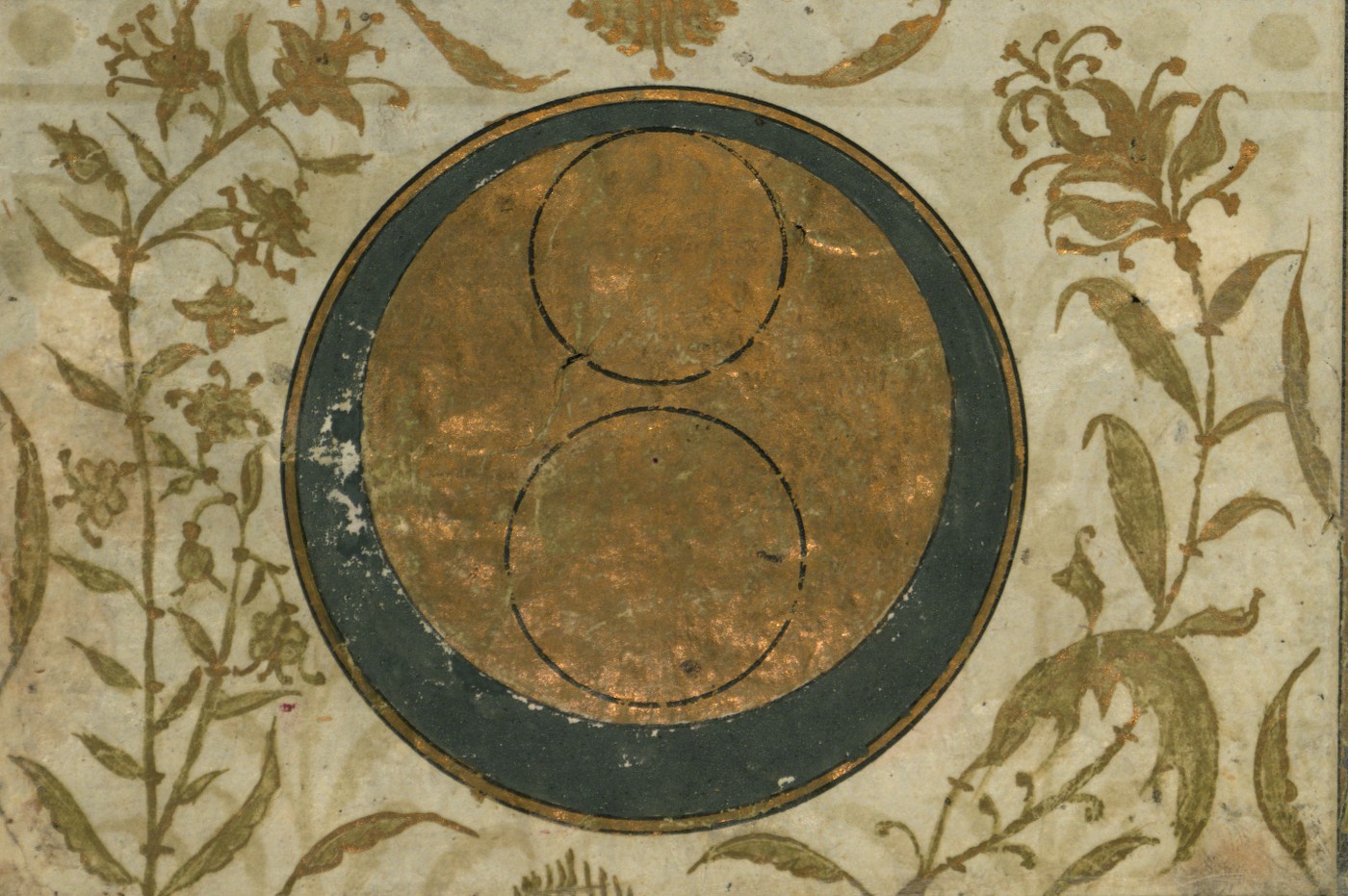
The Sun is the greatest of the planets, and its light exceeds that of all the stars. Its natural place is the fourth sphere. Its size is a hundred and sixty-six times the body of the earth. It traverses one degree a day. And this is the picture of its sphere.
* Needs human approval · 3
- *1line 1
متوازی جكرother readings:متوازییه ...,متوازیلردرBELİRSİZ. Yazı açık: متوازی'den sonra altında tek nokta olan ح/ج, keşideli ك ve ر (جكر). Tek noktalı ج bu müstensihte چ için de kullanılıyor (L3 قچان, L12 اوجیوز), bu yüzden 'çeker' okundu: 'iki sath-ı mütevâzî çeker' = iki paralel yüzeyle kuşatılır. Kazvînî'nin Arapçasında güneş feleği için 'iki paralel yüzeyin kuşattığı' ifadesi beklenir, anlam uyuyor; ama 'çekmek' fiilinin bu kullanımı alışılmadık. İnsan teyidi gerekli; çeviride (?) ile. - *2line 9
بنالریother readings:نباتلریBELİRSİZ (anlam). L9 ve L11'de aynı kelime. L11'de harfler net: ب-ن-ا-ل-ر-ی (ilk diş altında, ikinci üstünde nokta). L9'da ل'nin yanında ك keşidesine benzeyen kısa bir çizgi var. 'binâları' okundu ve 'bünyeleri' (beden yapıları) diye çevrildi. Ancak Kazvînî'nin özgün metninde bu pasajda 'hayvan ve nebât helâk olur' türünden bir ifade beklenebilir; o zaman kastedilen 'nebâtları' (bitkileri) olur ve noktalar yer değiştirmiş demektir. Diplomatik olarak yazıldığı gibi bırakıldı; çeviride (?) ile. İnsan kararı gerekli. - *3line 11
بنالریother readings:نباتلریBELİRSİZ (anlam). L9'daki ile aynı kelime ve aynı sorun; oradaki nota bakınız.
Resolved or approved · 8
- resolvedline 2
دوری مشرقدن مغربدرÇÖZÜLDÜ (okuma). Yazı net: 'devri maşrıkdan mağribdir' (doğudan batıya). 11a L1'de Utarid için yön 'mağribden maşrıkdır' (batıdan doğuya) idi; burada ters. Okuma kesin, diplomatik olarak korundu ve yazıldığı gibi çevrildi; içerikteki fark (günlük hareket mi, felekin kendi hareketi mi) bir insanın bakması için not edildi. - resolvedline 4
ایریلورother readings:ویریلورÇÖZÜLDÜ. 11a L3'te açık bırakılan kelimenin aynısı. Burada aynı satırın sonunda 'ol ایریلان' (ayrılan) geçiyor ve cümle 'Güneş feleğinden bir felek ayrılur ki merkezi hâric-i merkezdir ... ol ayrılan felek tedvîr menzilesindedir' diye kapanıyor; 'ayrılur' okuması bu iki geçişle birbirini doğruluyor. (11a L3'teki açık belirsizlik için de destek.) - resolvedline 5
عنایتیدرother readings:عنایتندندرÇÖZÜLDÜ. Kelime sonu ی-ت-ی-د-ر olarak okunuyor; 'inâyetindendir' için gereken ن-د-ن görülmüyor. 'kemâl-i lutf u inâyetidir ki' = 'kemal lütuf ve inayetidir ki'; cümle anlamı iki okumada da aynı. - resolvedline 6
اولوبother readings:اولورÇÖZÜLDÜ. Satır sonu sıkışık; ا-و-ل-و ve altında noktalı son harf (ب). Cümle L7'de 'altı ay olurdı' ile sürdüğü için zarf-fiil 'olup' gerekiyor. - resolvedline 8
حیواناته متأدیother readings:حیوانات متأدیÇÖZÜLDÜ. Son harf ه/ة biçiminde, yönelme eki ile 'hayvânâta' okundu; 'müte'eddî' (yol açan, varan) yönelme ister. Anlam: hayvanların helakine yol açardı. - resolvedline 10
كندولردنother readings:كذلك ...ÇÖZÜLDÜ. Yakından bakınca ك'den sonraki dişin üstünde nokta var (ن); ك-ن-د-و-ل-ر-د-ن = 'kendülerden'. Cümle: 'dahi altı ay kendülerden ba'îd olsa' (altı ay da onlardan uzak olsa). - resolvedline 12
یلدرother readings:میلدر,بیلدرÇÖZÜLDÜ. Harfler diş (altında iki nokta)-ل-د-ر; م görünmüyor. Uzaklık bildiren cümlede ('sath-ı a'lâsı ile sath-ı ednâsı ... yetmiş dört ...') beklenen birim mîl'dir (bkz. 11a L6 'میلدر'). Müstensihin م'yi atladığı kabul edildi; ar alanında yazıldığı gibi 'یلدر' bırakıldı, okunuş 'mîldir'. - resolvedline 12
اوجیوز بیك و اللی بش بیك یتمش دورتÇÖZÜLDÜ. Sayı açıkça 'üç yüz bin ve elli beş bin yetmiş dört' yazılmış: 355.074 mil. 'اللی' iki ل ile net (elli, 'altı' değil). Akıcı çeviride 'üç yüz elli beş bin yetmiş dört' denildi. Sayının özgün kaynaktaki değerle karşılaştırılması ayrı bir iştir.